The Utopia Experiment by Dylan Evans
Published February 18, 2016
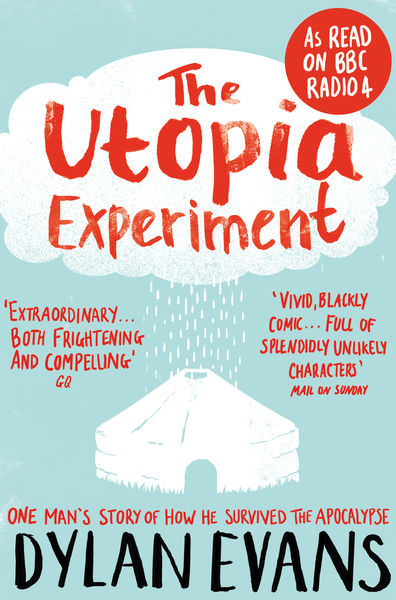
Book info
- Title The Utopia Experiment
- Author Dylan Evans
- Year 2015
- Genre Non-fiction
magine you have survived an apocalypse. Civilization as you knew it is no more. What will life be like and how will you cope? In 2006, Dylan Evans set out to answer these questions. He left his job in a high-tech robotics lab, moved to the Scottish Highlands and founded a community called The Utopia Experiment. There, together with an eclectic assortment of volunteers, he tried to live out a scenario of global collapse, free from modern technology and comforts. Within a year, Evans found himself detained in a psychiatric hospital, shattered and depressed, trying to figure out what had gone wrong. In The Utopia Experiment he tells his own extraordinary story: his frenzied early enthusiasm for this unusual project, the many challenges of post-apocalyptic living, his descent into madness and his gradual recovery. In the process, he learns some hard lessons about himself and about life, and comes to see the modern world he abandoned in a new light.
Thoughts
Whipped through this book in one sitting, it was really easy to read and digest, but raised some really big questions. The author chronicles his idea to set up a self-sufficient camp of fictional survivors of a global catastrophe, to see if it was possible and how it would all unfold. Unfortunately, it didn’t work out as planned and he gradually became mentally ill with depression during the process, eventually leaving for a stint in hospital before departing altogether.
It’s clear the experiment had a huge impact on Evans, and was incredibly painful to write about, even so many years later, so it’s nice to see his refreshing honesty and a warm self-deprecating tone throughout. It’s slightly less fun to read about the project itself, because it seems so woefully disorganised. I mean, I can’t imagine doing such a thing but if I were to set up a self-sufficient camp, I might crack a book about seasonal gardening or woodworking beforehand.
Evans’ views on the potential for global catastrophe seem to vary depending on his frame of mind, and that’s totally fine because it allows us to travel through various arguments for and against - from his days aiming to create artificial intelligence, through those where he wants the entire world wiped out so we can start over again, it makes you start questioning things yourself. So, it wasn’t a perfect project and it’s not a perfect book but it does all it can to get you thinking about the future of the planet, and that can only be a good thing.
Rating: 4 / 5