Life at the Limit by Sid Watkins
Published January 15, 2014
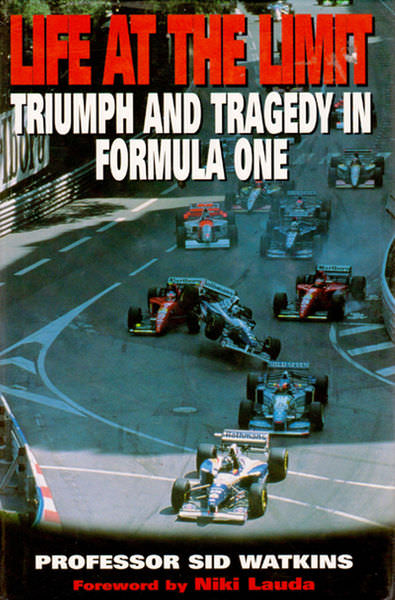
Book info
- Title Life at the Limit
- Author Sid Watkins
- Year 1996
- Genre Sports
Grand Prix racing has undergone sweeping changes in the last thirty years. Many of these involve safety and medical rescue. The man behind them - a champion in the racing world although he has never won a race - is the eminent neurosurgeon Sid Watkins. Life at the Limit is his remarkable story. It spans the most exciting years in Grand Prix racing and includes intimate portraits of motorsport's greatest names, from Jackie Stewart and Niki Lauda to Alain Prost and Damon Hill. Sid Watkins has also witnessed, at first hand, some of the most severe and spectacular racing accidents. His account of these is made all the more poignant by the fact that some of the men he has rescued, sometimes at the point of death, have been personal friends. From Monza, in 1978, where Ronnie Petersen suffered a fatal accident, to Imola in May 1994 where Ayrton Senna met his untimely death, the high, and low, points of Grand Prix racing are vividly described.
Thoughts
This book, the first of three that he wrote, gives an insight into how the Professor got to his position, what kind of activities he got up to during his time in F1, as well as thoughts on various aspects of the sport from a position as a fan, and as a doctor. A big part of the book is detailing some of the huge accidents that Watkins dealt with, and the aftermath of such. Whether it was a tragic and fatal crash, such as Ratzenberger or Villeneuve, or one that the participant walked away from, Sid talks of them with the same clinical descriptions youíd expect from a doctor.
Even though I know that it’s impossible to get agreement in Formula One, and it is like battling the tide, I was still surprised at some of the safety introductions that people didn’t want to know about. Being followed by a medical car shouldn’t have too much effect on anybody, but was clearly not a welcome proposal. I particularly enjoyed the section about their first couple of outings, borrowing racing gear from the actual drivers, and desperately trying to keep up with the pack. It had never occurred to me that the medical car driver might be nervous!
Although the book is mostly about what happened on track in F1, there’s also a chapter on Frank Williams and the accident that left him confined to a wheelchair. It felt slightly intrusive to read these paragraphs, but equally, it shone a light on just what a fighter Frank is, and the strength of character he displayed. As Sid sums up: “He was tough and resolute and never once whinged about what had happened to him.”
It’s hard to call this book brilliant, given the subject matter, but it’s such an important and difficult read that it can only be recommended. Watkins writes in a matter-of-fact style, not self-aggrandising or boasting about what was achieved, but simply detailing the methodical and never-ending process of improving safety in motorsport.
In some ways, it’s not a hugely personal book, it has that distance that can only come from training to be a doctor and dealing with horrors every day, but at the same time it transports you to the time and place, so you can see almost through Sid’s eyes.
It’s important to know where Formula One has come from, to know how and why it has evolved the way it has. This book doesn’t whitewash history or paint it in a rosy shade, it’s the stark truth about a difficult time, but one that pushed safety forward.
Rating: 5 / 5
