How to Watch The Olympics by David Goldblatt
Published July 21, 2012
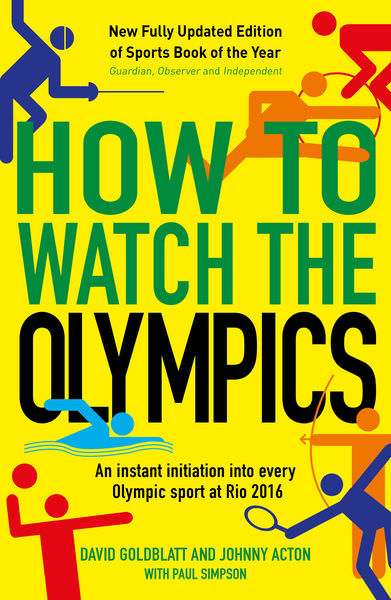
Book info
- Title How to Watch the Olympics
- Author David Goldblatt
- Year 2011
- Genre Sports
The Olympics is the world's biggest sporting event - and it moves centre stage for London 2012. Yet the games the world is familiar with - football, cricket, rugby, baseball, motor sports - are either missing or have a token presence. In their place are games that most of us have not a clue how to play or to watch. Which is where this witty, insightful book comes into play, offering the back story behind each Olympic sport and, by means of fiendishly clever diagrams and prose, explaining the rules and finer points. Once you have read David Goldblatt and Johnny Acton's accounts, you'll be on tenterhooks to see whether the Danish or the Koreans triumph at handball, just what the Italian fencers are up to, and if Greco-Roman wrestling really is like a game of chess.
Thoughts
This was recommended to me, actually twice I think, by the Olympics-mad Amy. I added it to my Wish List the first time round, but with the Olympics just around the corner, the second recommendation saw it downloaded onto my Kindle straight away. It’s an invaluable guide to each and every event that the coming sporting extravaganza has to offer, and although it was useful to read and digest, I think its real use will come as a tool to refer to during the Olympic period.
For each sport (including the Opening, Closing and Medal Ceremonies) there’s a breakdown of the history of the sport, how it has fared at the Olympics, key nations to keep an eye on, and most important of all, rules and scoring for each event. I picked up loads of fascinating facts, like the rule in basketball that you have to shoot every 24 seconds or so, to stop people hogging the ball and playing defensively. Or the fact that Olympic football teams have to have all bar three representatives under the age of 23. Facts!
My only complaint of the book (aside from a few Kindle proofing and layout issues) is the overuse of capital letters. They can be used to good effect to emphasise important words and phrases - things to remember and key points. Sometimes it felt like every third word was capitalised, which made it less effective and harder to read. Sometimes, and very oddly, the capitalisation would stop midway through a word. Overall, that was a strange technique that I didn’t gel with, but it was a minor complaint for a book that is stacked full of so much useful information.
Rating: 4 / 5
